Transport Aircraft: Bridging Aviation and 3D Printing for Modern Creativity
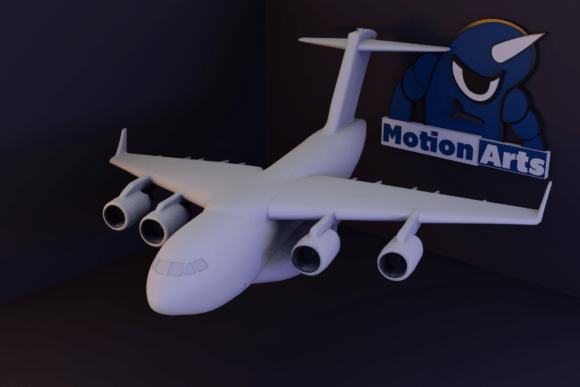
In an era where digital fabrication is reshaping how we create, the transport aircraft has become more than just a symbol of global logistics—it's now a compelling subject for 3D printing enthusiasts and professionals alike. The fusion of aviation design and additive manufacturing opens new pathways for hobbyists, educators, and creators to engage with engineering principles in a hands-on, accessible way. A 3D model of a transport aircraft in a simplified style, featuring multiple engines and a robust design, exemplifies this trend. Its well-balanced volume distribution and solid structure make it ideal for printing, especially for those at the beginner level looking to explore 3D modeling without unnecessary complexity.
Why the Transport Aircraft Captures Interest
The transport aircraft has long been a cornerstone of military and civilian operations, known for its ability to carry heavy cargo across vast distances. Its design—often characterized by a broad fuselage, multiple engines, and reinforced landing gear—reflects functionality and endurance. This practicality translates well into 3D modeling, where structural integrity and visual clarity are key. As 3D printing becomes more accessible, users are increasingly drawn to models that offer both educational value and aesthetic appeal. The transport aircraft fits this niche perfectly, serving as a canvas for learning about aerodynamics, engineering design, and material properties.
3D Printing and the Rise of Accessible Design
The evolution of 3D printing has democratized design, allowing individuals to create tangible objects from digital blueprints. For beginners, the challenge lies in finding models that are both engaging and technically feasible. The transport aircraft 3D model for printing addresses this by offering a simplified yet realistic representation. Its design prioritizes ease of assembly and stability, with supports required only in key areas—making it a manageable project for those new to slicing software and filament-based printing.
This model’s robust geometry ensures that even minor calibration issues won’t compromise the final output. Its balanced volume distribution reduces warping and improves adhesion to the print bed, two common concerns for novice users. As a result, the transport aircraft 3D model becomes not just a decorative item but a practical tool for understanding the fundamentals of 3D printing workflows.
Practical Applications Beyond the Hobbyist's Bench
While many may start with 3D printing as a hobby, the transport aircraft model has broader applications. Educators, for instance, can use it to teach students about aerospace engineering, logistics, and design thinking. By assembling and analyzing the model, learners gain insights into how real-world aircraft are structured and why certain design choices are made for performance and safety.
For entrepreneurs and small business owners, such models can serve as prototypes for larger-scale manufacturing or as part of marketing materials. A printed transport aircraft could also be integrated into themed displays, corporate gifts, or educational kits. Its versatility makes it a valuable asset for anyone looking to blend creativity with technical skill.
Design Considerations for a Beginner-Friendly Model
The Avião de Transporte – Modelo 3D para Impressão (transport aircraft 3D model for printing) was specifically designed with accessibility in mind. Its simplified geometry ensures that even users with entry-level printers can produce a clean, stable result. The need for supports is minimal and strategically placed, reducing post-processing time and material waste. This makes the model not only beginner-friendly but also environmentally conscious, aligning with the growing trend of sustainable design practices in the 3D printing community.
- Robust fuselage design for structural integrity
- Multipiece engine layout for modular assembly
- Well-distributed weight to prevent tipping during display
These features collectively enhance the user experience, ensuring that the focus remains on creativity and learning rather than troubleshooting technical issues.
Customization and Creative Potential
One of the most exciting aspects of the transport aircraft 3D model is its adaptability. Users can customize the design by adding decals, painting details, or integrating LED lights for display purposes. Some may choose to modify the original files to scale the model up or down, or to add moving parts such as rotating wheels or adjustable flaps. These modifications not only personalize the project but also serve as a gateway to more advanced modeling techniques.
For creators and content producers, the transport aircraft model provides a visually engaging subject for tutorials, time-lapse videos, or product showcases. Its recognizable silhouette and industrial aesthetic lend themselves well to photography and digital storytelling, making it a versatile asset in a creator’s toolkit.
Aligning with Industry Trends and User Expectations
The growing popularity of 3D-printed aviation models reflects a broader shift in consumer behavior. People are increasingly seeking out tangible, interactive experiences in a digital world. Whether it’s for personal satisfaction, educational enrichment, or professional development, users expect tools that are both functional and inspiring. The transport aircraft 3D model meets these expectations by combining real-world relevance with creative flexibility.
Moreover, as remote work and home-based learning become more common, interest in at-home fabrication tools like 3D printers has surged. Projects like this aircraft model cater to a growing audience of self-directed learners and makers who value hands-on engagement. This trend is further supported by the rise of online marketplaces and open-source platforms that make it easier than ever to access and share 3D designs.
Looking Ahead: The Future of 3D Models in Aviation and Education
As 3D printing technology continues to evolve, so too will the applications of models like the transport aircraft. Future iterations may include enhanced realism, interactive components, or compatibility with augmented reality platforms. These advancements will further bridge the gap between digital design and physical exploration, empowering users to engage with complex systems in intuitive ways.
For now, the current model stands as a testament to how accessible design can inspire curiosity and learning. Whether used for a personal collection, a classroom demonstration, or a creative project, the transport aircraft 3D model for printing offers a meaningful entry point into the world of additive manufacturing. It exemplifies how even simplified designs can carry significant educational and aesthetic value—proving that sometimes, less is more when it comes to fostering innovation.